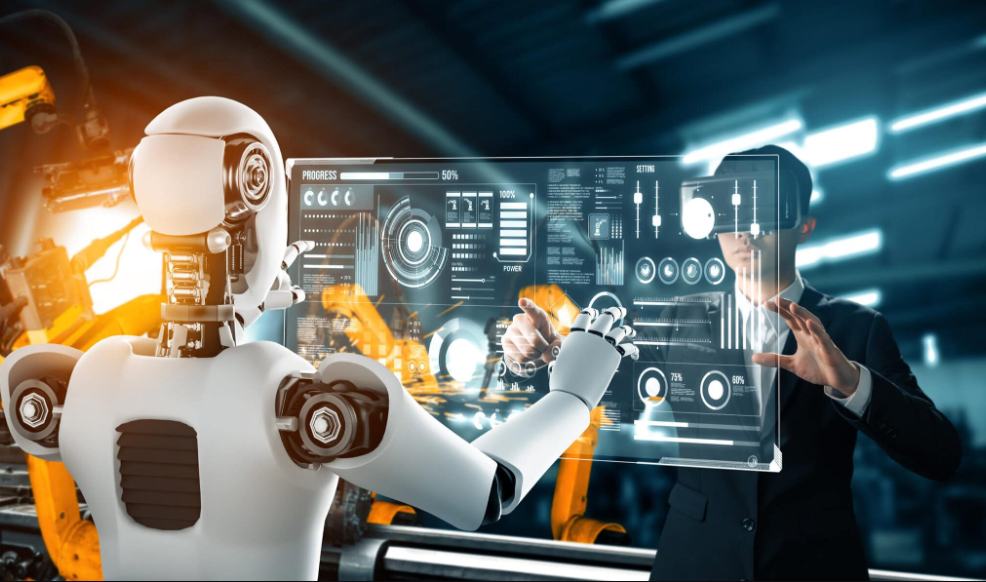
Automation has become one of the most important forces shaping the modern digital economy. Businesses across industries are constantly searching for faster, smarter, and more efficient ways to handle operations, reduce costs, and improve productivity. At the center of this transformation is machine learning, a powerful technology enabling intelligent systems to learn, adapt, and make decisions with minimal human intervention. Companies implementing advanced solutions like Droven.io Machine Learning technologies are accelerating automation strategies and redefining how modern organizations operate.
Machine learning breakthroughs are transforming automation from simple rule-based systems into highly adaptive and intelligent solutions capable of handling complex tasks. From manufacturing and healthcare to finance and customer service, machine learning-driven automation is reshaping industries worldwide.
As data volumes continue increasing and artificial intelligence technologies evolve, smarter automation is becoming the foundation of future business innovation.
Understanding Machine Learning and Automation
Traditional automation systems rely on fixed instructions programmed by developers. These systems can perform repetitive tasks efficiently, but they struggle when conditions change or unexpected situations arise.
Machine learning changes this approach entirely. Instead of depending solely on predefined rules, machine learning systems analyze data, identify patterns, and improve their performance over time.
This ability to learn makes automation significantly more intelligent and flexible.
Machine learning-powered automation can:
- Adapt to changing conditions
- Predict future outcomes
- Detect anomalies
- Make data-driven decisions
- Improve efficiency continuously
- Reduce manual intervention
The combination of machine learning and automation is creating systems capable of handling tasks that once required human intelligence and judgment.
See also: Business Automation Technologies
The Evolution of Intelligent Automation
Automation has evolved dramatically over the last decade. Early automation systems focused mainly on repetitive manufacturing tasks and basic software operations.
Today, machine learning breakthroughs are enabling advanced forms of intelligent automation that can process language, analyze images, predict trends, and interact naturally with users.
Modern intelligent automation includes:
- Robotic process automation
- Predictive analytics
- Natural language processing
- Computer vision
- AI-powered chatbots
- Autonomous systems
Businesses are no longer limited to automating simple workflows. Machine learning allows organizations to automate increasingly complex operations while improving accuracy and scalability.
This evolution is transforming industries at an unprecedented pace.
Machine Learning in Business Process Automation
One of the most important applications of machine learning is business process automation.
Organizations are using intelligent systems to automate tasks such as:
- Invoice processing
- Data entry
- Document analysis
- Customer support
- Inventory management
- Scheduling
- Financial reporting
Machine learning algorithms can analyze massive amounts of operational data and optimize workflows automatically.
For example, intelligent document processing systems can extract information from invoices, contracts, and forms with high accuracy. Customer service chatbots can understand natural language queries and provide instant responses without human agents.
These technologies help businesses reduce operational costs while improving speed and productivity.
Smarter Customer Service Systems
Customer service has become one of the biggest areas transformed by machine learning automation.
Modern consumers expect fast, personalized, and available-around-the-clock support. Machine learning-powered systems are helping businesses meet these expectations more effectively.
AI chatbots and virtual assistants now use machine learning to:
- Understand customer questions
- Analyze sentiment
- Provide personalized responses
- Resolve issues automatically
- Learn from previous interactions
Unlike older automated systems that relied on scripted responses, modern machine learning chatbots continuously improve based on customer interactions.
Businesses benefit from:
- Faster response times
- Reduced support costs
- Improved customer satisfaction
- Better scalability
As natural language processing technologies improve, automated customer service systems will become even more conversational and intelligent.
Predictive Maintenance in Manufacturing
Manufacturing industries are using machine learning breakthroughs to improve operational efficiency through predictive maintenance.
Traditional maintenance approaches often rely on fixed schedules or reactive repairs after equipment failures occur. Machine learning systems, however, can predict failures before they happen.
Sensors installed on machinery collect real-time performance data, including:
- Temperature
- Vibration
- Pressure
- Energy usage
- Operational patterns
Machine learning algorithms analyze this data to identify signs of potential equipment problems.
Predictive maintenance helps manufacturers:
- Reduce downtime
- Lower repair costs
- Improve production efficiency
- Extend equipment lifespan
- Prevent unexpected failures
This smarter form of automation is making industrial operations more reliable and cost-effective.
Intelligent Supply Chain Automation
Supply chains are becoming increasingly complex due to global commerce and changing customer demands. Machine learning is helping businesses automate and optimize supply chain operations more effectively.
Machine learning applications in supply chain management include:
- Demand forecasting
- Inventory optimization
- Delivery route planning
- Warehouse automation
- Supplier risk analysis
- Logistics optimization
Retailers and logistics companies use predictive analytics to anticipate customer demand and avoid inventory shortages.
Delivery companies analyze traffic patterns and shipping data to optimize transportation routes in real time.
These intelligent systems improve operational efficiency while reducing waste and delays.
Machine Learning in Financial Automation
The financial industry has rapidly adopted machine learning-driven automation to improve accuracy, security, and decision-making.
Financial institutions use machine learning for:
- Fraud detection
- Credit scoring
- Risk assessment
- Algorithmic trading
- Customer verification
- Financial forecasting
Fraud detection systems powered by machine learning can analyze millions of transactions instantly and identify suspicious activity patterns.
Automated financial analysis tools also help organizations make faster investment and budgeting decisions.
The ability to process large volumes of financial data in real time is giving businesses major advantages in speed and accuracy.
Healthcare Automation Is Advancing Rapidly
Healthcare is another industry experiencing major transformation through machine learning automation.
Medical organizations are using intelligent systems to automate:
- Medical imaging analysis
- Patient monitoring
- Appointment scheduling
- Healthcare record management
- Disease prediction
- Drug discovery research
Machine learning algorithms can analyze medical scans with impressive accuracy and help doctors identify abnormalities earlier.
Automated healthcare systems improve efficiency while reducing administrative burdens on medical professionals.
Wearable health technologies also rely on machine learning to monitor patient health data in real time.
These innovations are helping healthcare providers deliver faster, smarter, and more personalized care.
Computer Vision and Visual Automation
Computer vision is one of the most exciting machine learning breakthroughs driving smarter automation.
Machine learning-powered computer vision systems can analyze and interpret visual information from images and videos.
Applications include:
- Facial recognition
- Quality inspection
- Autonomous vehicles
- Security monitoring
- Retail analytics
- Medical imaging
Manufacturers use computer vision systems to detect product defects automatically during production processes.
Retail businesses analyze customer movement patterns inside stores to improve layouts and shopping experiences.
Self-driving vehicle technologies depend heavily on machine learning and computer vision for navigation and obstacle detection.
Visual automation technologies will continue expanding across industries in the years ahead.
Cybersecurity Automation
Cybersecurity threats are growing more sophisticated every year, making manual security monitoring increasingly difficult.
Machine learning is helping organizations automate cybersecurity defenses by detecting threats in real time.
Machine learning cybersecurity systems can:
- Monitor network activity
- Detect unusual behavior
- Identify malware
- Prevent fraud
- Respond to attacks automatically
Unlike traditional security tools that rely on static rules, machine learning algorithms continuously learn from evolving threat patterns.
Automated cybersecurity systems help businesses protect sensitive information more effectively while reducing response times.
As digital threats continue increasing, intelligent security automation will become even more critical.
The Rise of Autonomous Systems
Machine learning breakthroughs are also driving the development of fully autonomous systems.
Autonomous technologies include:
- Self-driving vehicles
- Delivery drones
- Warehouse robots
- Smart industrial machines
- Autonomous farming equipment
These systems use machine learning algorithms to process environmental data, make decisions, and adapt to changing conditions without direct human control.
Although many autonomous technologies are still developing, they represent the future of intelligent automation across multiple industries.
Ethical Challenges of Automated Intelligence
While machine learning automation offers many benefits, it also raises important ethical and social concerns.
Some key challenges include:
- Job displacement
- Data privacy issues
- Algorithm bias
- Lack of transparency
- Security risks
- Overdependence on automation
Businesses must ensure machine learning systems are designed responsibly and ethically.
Human oversight remains essential, especially in areas involving healthcare, finance, law enforcement, and public safety.
Responsible AI development will play a critical role in maintaining trust in automated systems.
The Future of Smarter Automation
The future of machine learning-driven automation looks incredibly promising.
Upcoming advancements may include:
- More advanced robotics
- Fully autonomous transportation
- Hyper-personalized digital services
- AI-powered business management
- Intelligent virtual workforces
- Real-time adaptive systems
As machine learning models become more sophisticated, automation systems will gain deeper understanding, faster decision-making abilities, and improved adaptability.
Businesses that invest in intelligent automation today are preparing themselves for the future digital economy.
Organizations that fail to adopt these technologies may struggle to remain competitive as automation becomes standard across industries.
Conclusion
Machine learning breakthroughs are transforming automation into a smarter, more adaptive, and highly efficient force shaping the future of technology and business.
From customer service and healthcare to manufacturing and cybersecurity, intelligent automation is improving productivity, reducing operational costs, and enabling faster decision-making across industries.
As machine learning technologies continue advancing, smarter automation will become even more integrated into everyday operations and digital experiences. Businesses that embrace these innovations will be better positioned to thrive in an increasingly data-driven and technology-powered world.